Snapr: Software Engineers as AI Agents, Powered by Kubernetes
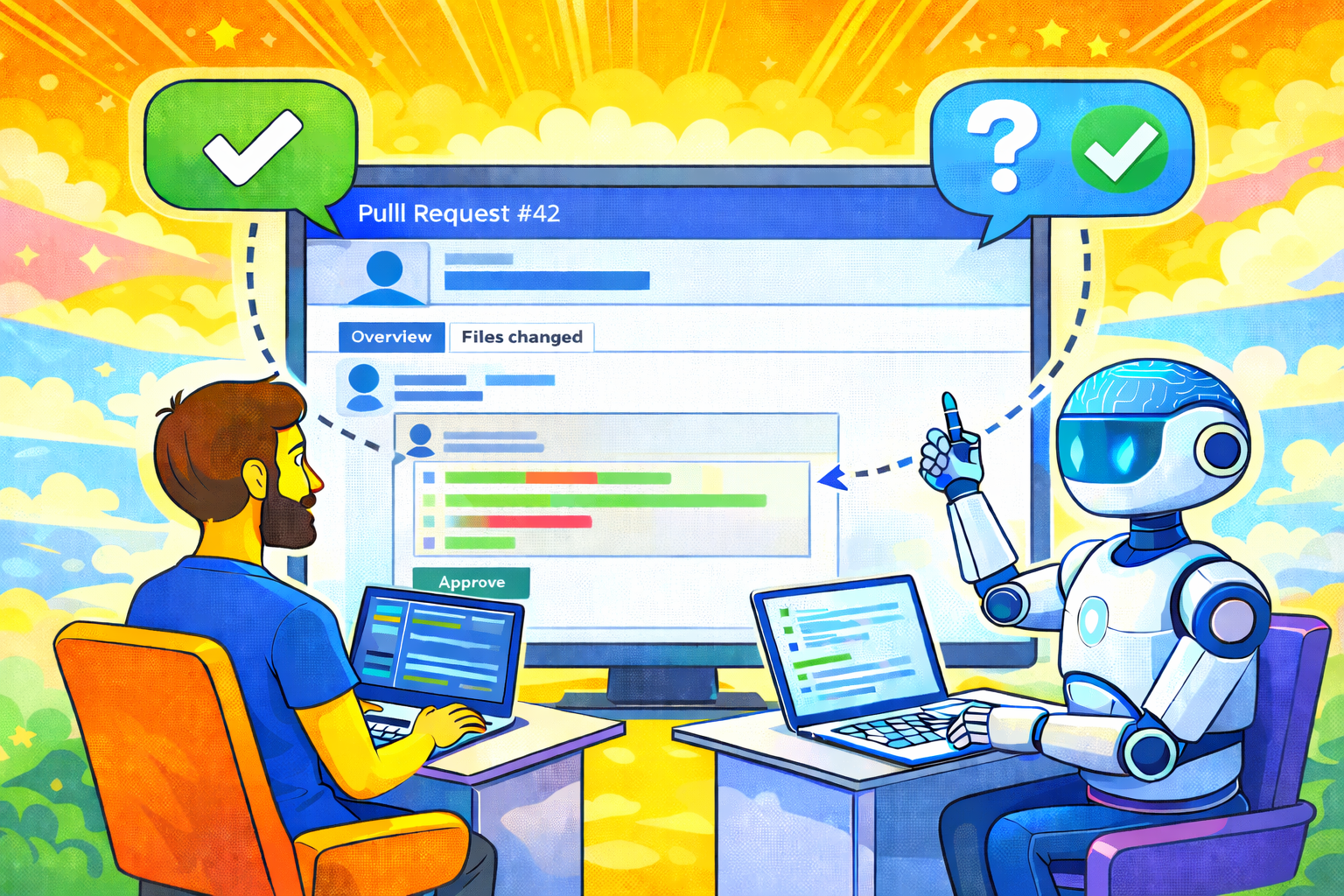
Table of Contents
When things happen, developers act
Modern integration platforms are full of activity. Issues are discussed, pull requests are reviewed, comments are added, and decisions are made through conversations.
Developers react to these events as part of their daily work. They analyze context, propose changes, break down problems, and move work forward based on what happens in the platform.
Over time, this flow of events becomes the primary way work is coordinated. Conversations and comments are not just communication, they are how intent is expressed.
Events as executable work
In many workflows, these events already describe the work to be done. A comment asking for analysis, a request to refine an issue, or a suggestion to implement a change contains clear intent. The context is available, the instructions are explicit, and the expected outcome is understood.
Treating events as executable work means recognizing them not just as signals, but as concrete tasks that can be acted upon directly.
Introducing Snapr
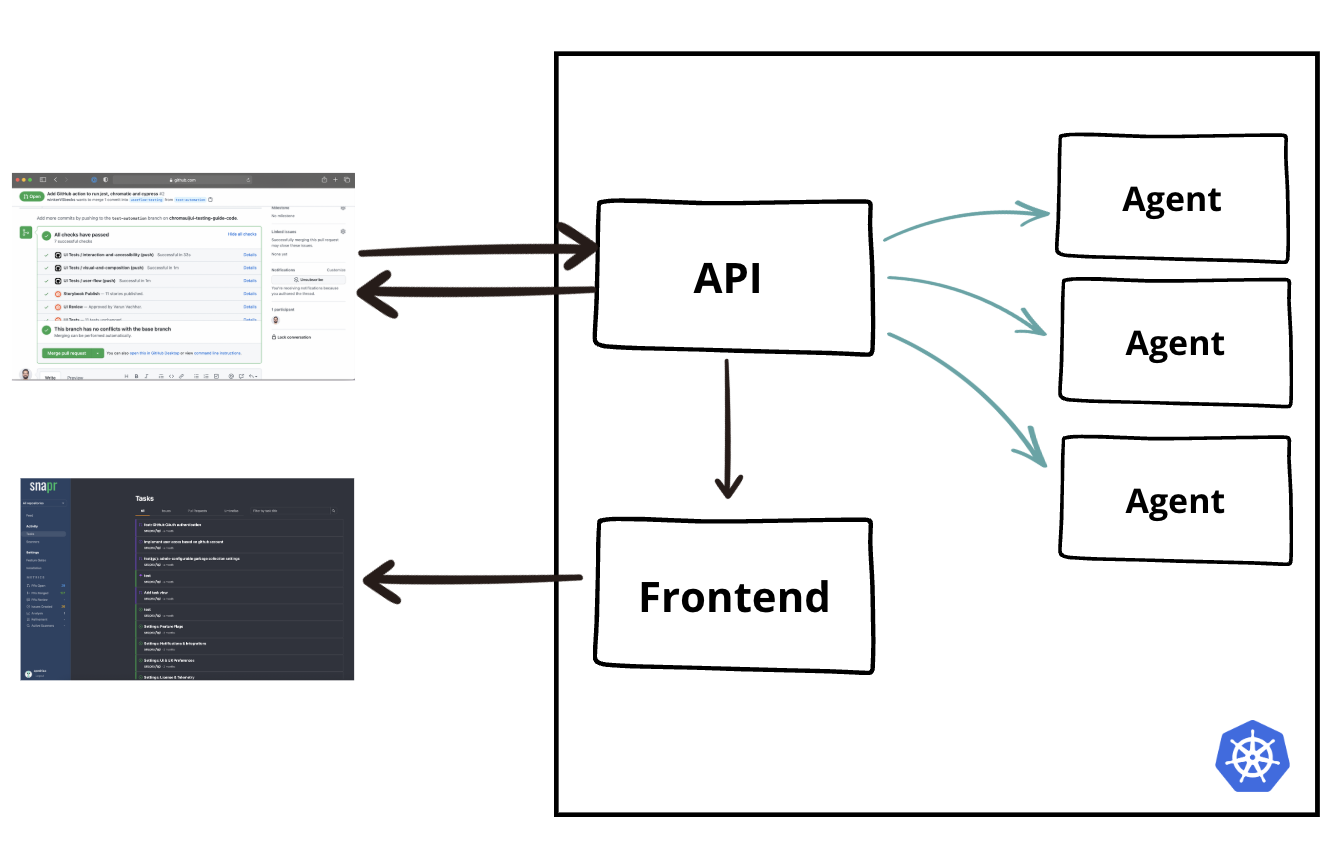
Snapr is built around this idea. It is a Kubernetes-native application that executes software engineering work directly in response to events coming from integration platforms.
Snapr is installed in a Kubernetes cluster and exposes an API endpoint that receives events from the platform. These events are interpreted as commands: simple, declarative requests for work expressed through the same comments and interactions developers already use.
When such an event is received, Snapr creates an ephemeral Kubernetes Job to execute the task, using the platform context as its primary input.
A software engineer that responds to commands
Each Snapr execution runs an AI-powered agent that acts as a software engineer. The agent operates with full context from the platform, including repository data, issue or pull request descriptions, comments, and ongoing discussions. It performs tasks such as analysis, reviews, refinements, or proposing changes, depending on the command it receives.
Interaction happens directly in the platform itself. Results are shared through comments, reviews, or pull requests, making Snapr’s work visible, auditable, and easy to follow alongside human contributors.
Snapr does not replace developers. It integrates as one more engineer in the workflow, one that responds to commands, does the work, and disappears when the task is done.
What Snapr can do today
Snapr already supports a range of software engineering tasks executed directly from platform interactions, including:
-
Generate Pull Requests based on an issue context
-
Analyzing issues full repository and discussion context
-
Reviewing pull requests and providing contextual feedback
-
Refining large issues into smaller, actionable tasks
-
Running configurable scanners to analyze projects on demand or on a schedule
These capabilities are expressed through simple platform interactions and executed as isolated Kubernetes workloads. A complete and up-to-date list of features, supported workflows, and examples is available in the documentation.
Operational visibility
Snapr includes a lightweight, authenticated administrative UI focused on observability and basic configuration.
The UI provides visibility into issues and pull requests where Snapr has executed work, allowing teams to track execution status and actions performed.
It also offers a simple way to manage operational aspects such as scanners and cleanup policies for resources generated by Snapr, both in the integration platform and in Kubernetes.
Interaction and collaboration remain fully embedded in the integration platform itself.
Built for evolving models and platforms
Snapr is designed around execution and lifecycle, not around a specific AI model or integration source.
Because agents are executed as isolated workloads, their behavior can evolve naturally as language models improve. Better reasoning, larger context windows, or new capabilities can be adopted without changing the execution model itself.
The same applies to integration platforms. While Snapr currently focuses on GitHub as an event source, its architecture is not tied to it. Events, context, and commands are treated generically, making it possible to support additional platforms over time.
GitHub is the first integration Snapr supports but not the last.
Executing work on Kubernetes
All work in Snapr is executed as Kubernetes Jobs.
Each task has a clear lifecycle, runs in isolation, and terminates once the work is complete. There are no long-running bots and no hidden execution paths.
By relying on Kubernetes as its runtime, Snapr uses the same execution model that already powers production systems. Resource limits, isolation, and observability are built in from the start.
Current state and next steps
Snapr is under active development.
The core execution model is in place, and the focus is on refining agent behavior, improving workflows, and expanding supported integrations.
Snapr is currently available under a renewable 14-day license, allowing teams to explore and experiment with the platform at no cost during the evaluation period.
Documentation about Snapr’s commands, examples, and installation instructions are available in the website so if you are interested in experimenting with this model, the best place to start is the documentation.