Pull Request Generation
Generate a Pull Request using the context from an Issue.
Assign development tasks to Snapr
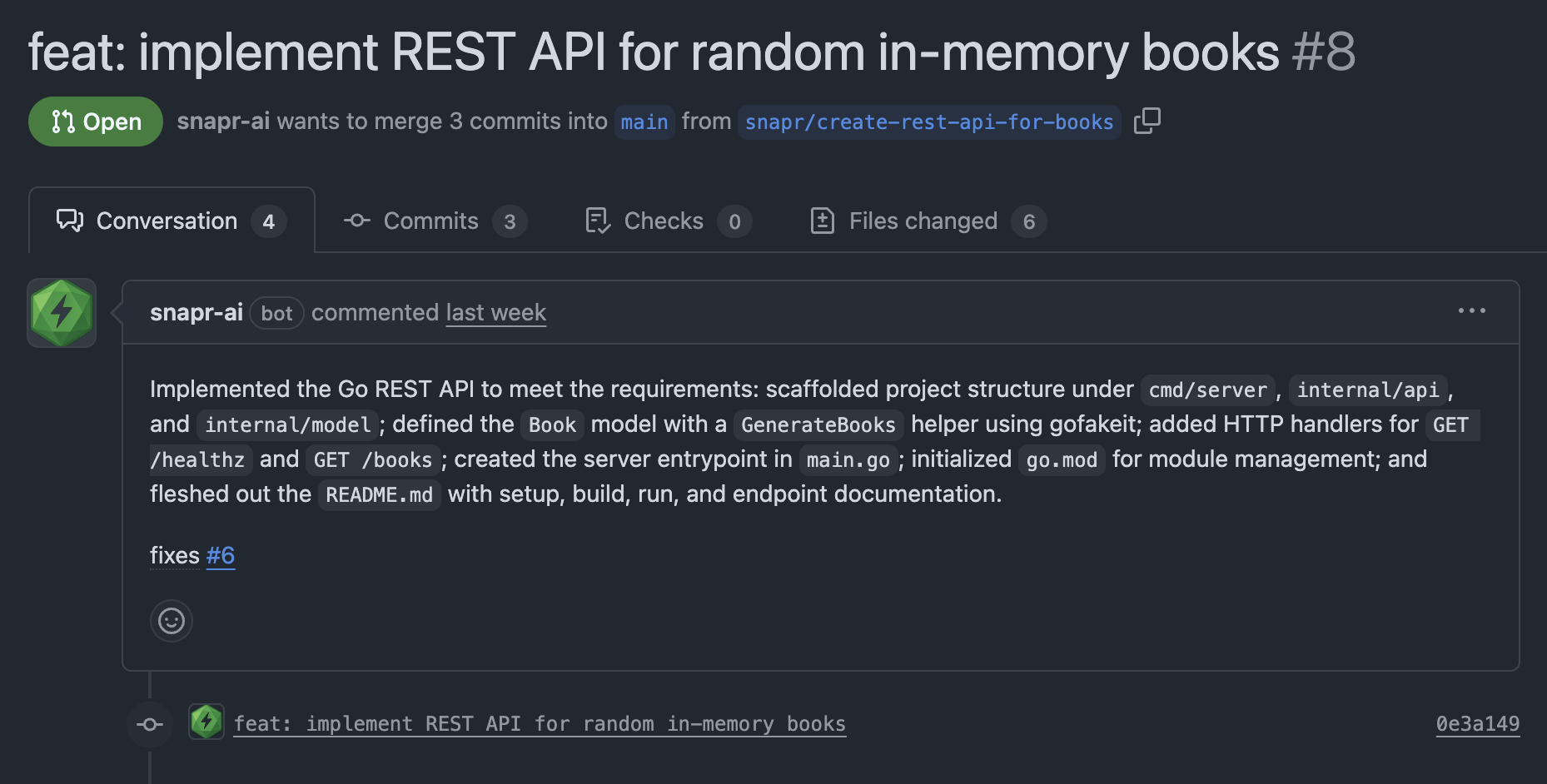
Snapr can generate Pull Requests by following a familiar development workflow: a developer creates an Issue and asks Snapr to take over, and Snapr produces a Pull Request to address it.
How it works?
-
1
The trigger
A developer comments
/snapr developon an Issue, triggering a webhook that notifies Snapr to start working on the request.Optionally, the developer can first run
/snapr analyzeto let Snapr review the context, ask clarifying questions, or suggest an approach before starting development. -
2
The reaction
Snapr receives the event and launches a short-lived Kubernetes Job to handle the request.
-
3
The analysis
Inside the Job, Snapr analyzes the Issue description and its conversation history, extracting relevant context, requirements, and goals. If additional information is needed, Snapr can ask for clarification before proceeding.
-
4
The generation
Using this context, Snapr creates a new branch, generates the required code changes, and opens a Pull Request addressing the original Issue.
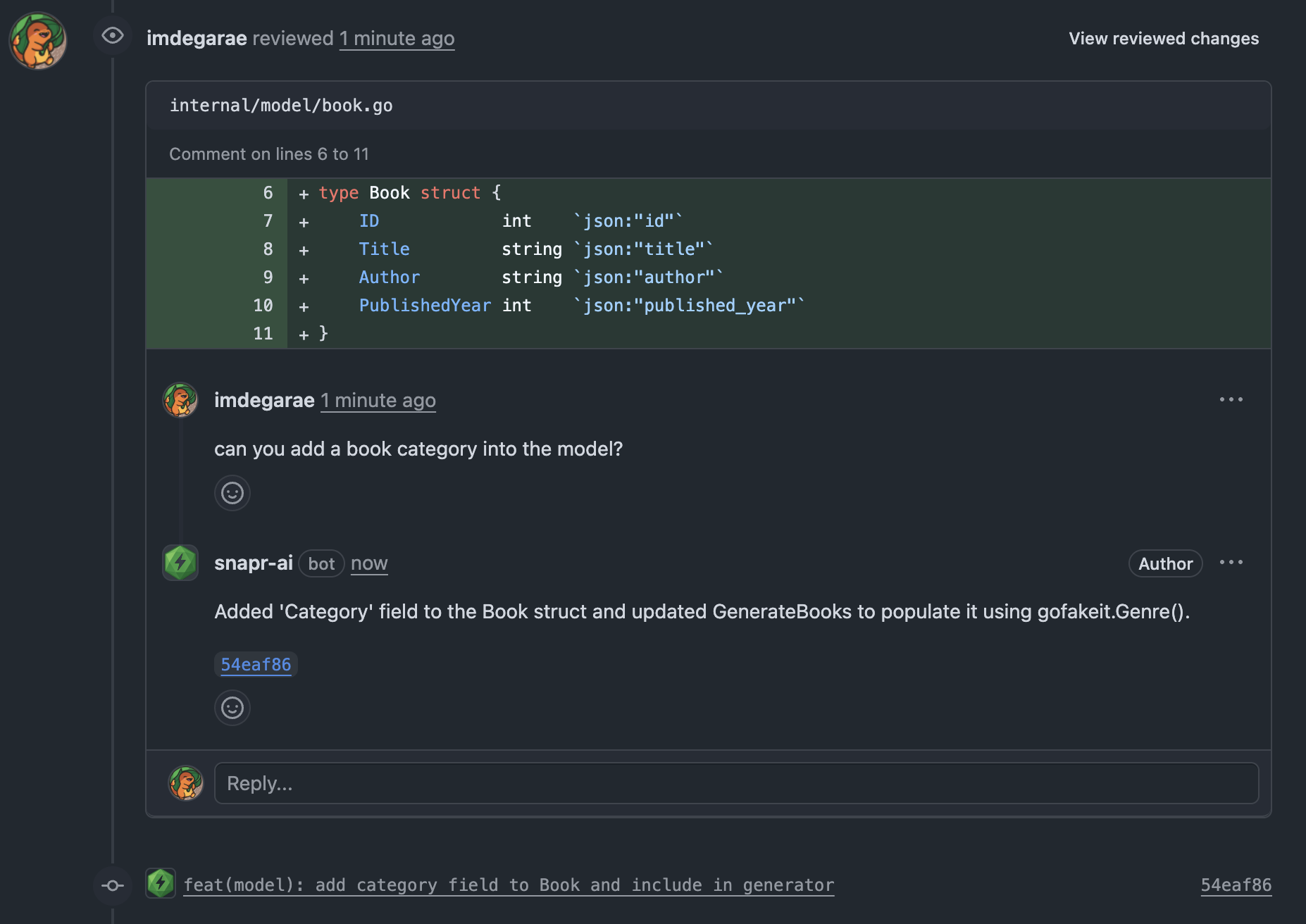
Snapr address your feedback
When reviewers leave comments or change requests, Snapr analyzes the feedback, updates the code, and pushes new commits to the same Pull Request, keeping the PR aligned with feedback until it’s ready to merge.